Notodonta pacifica Behr, 1892
View Photographic Plate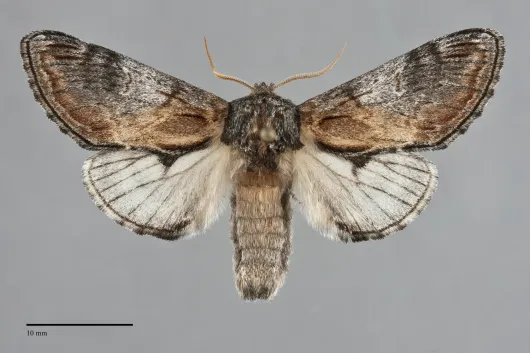
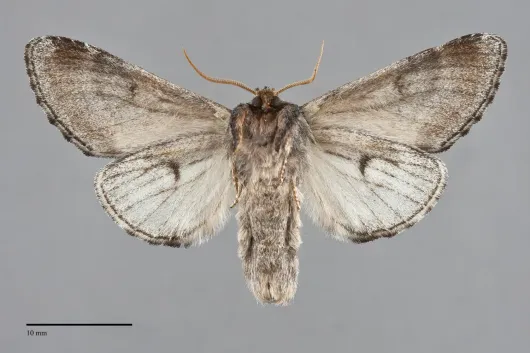
Similar species
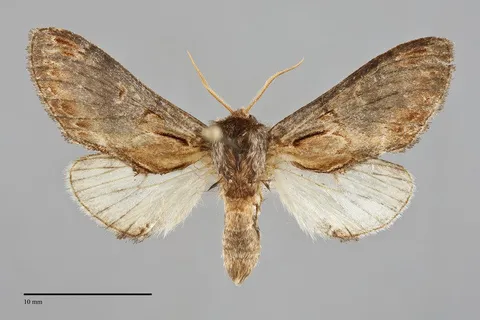
Notodonta pacifica is an attractive warm brown and gray prominent moth with pale hindwings, measuring 21–24 mm. Key features include elongate forewings with a black flange on the inner posterior margin, ochre and red-brown coloration along the posterior wing, and hoary gray tones in the median area. The reniform spot appears as a transverse dark gray or red-brown line surrounded by paler scales. Hindwings are predominantly white with gray suffusion, particularly in females.
The species distinguishes itself through the combination of gray and red-brown forewings with a light gray anterior median area and posterior margin flange. It differs from the similar Notodonta ochreata in having a smoother forewing with more extensive brown color on the distal wing, whereas N. ochreata displays strong charcoal mottling. Male antennae are bipectinate.
Habitat
The species typically inhabits mixed hardwood-conifer forests or riparian areas along creeks at lower elevations both west and east of the Cascades, though it is generally rare and sporadic.
Distribution
Range extends from southern British Columbia's northern Okanagan region southward, with scattered western records from the northeastern Olympic Peninsula and northern Willamette Valley. Globally, Notodonta pacifica is confined to the American West, extending through the northern portions of California and Nevada.
Life History
No specific foodplant records exist, though the species may specialize on aspens based on related Notodonta species' preferences. The moth appears single-brooded, with adults present from May through August, with most records before mid-July. Adults are nocturnal and attracted to light.