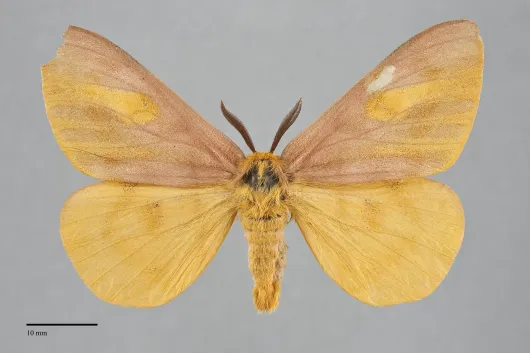
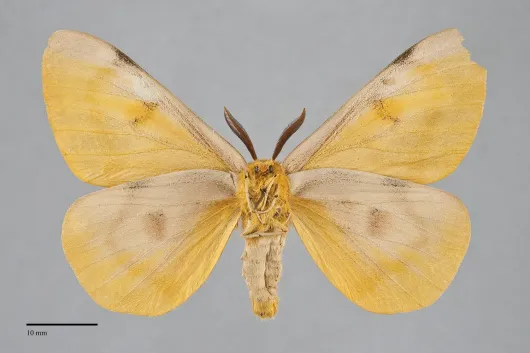
Similar species
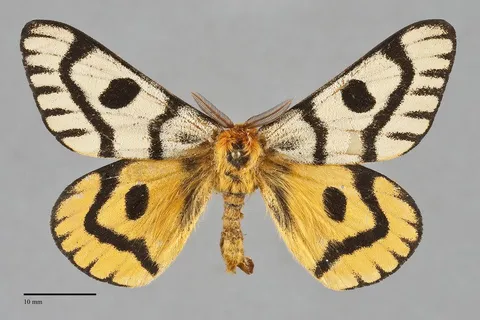
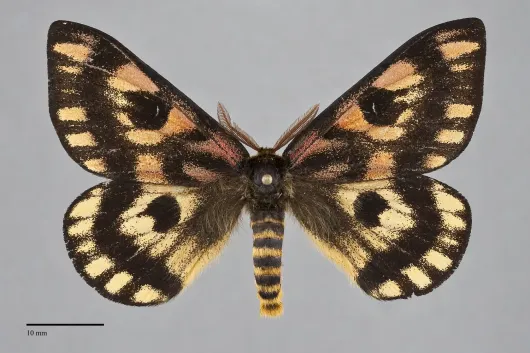
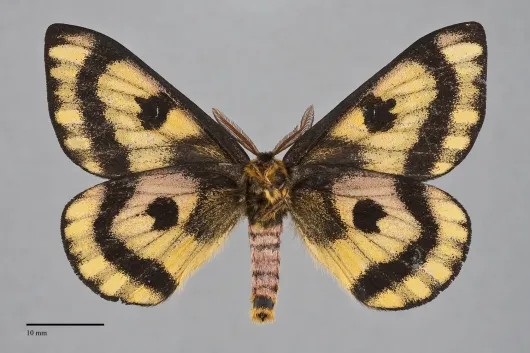
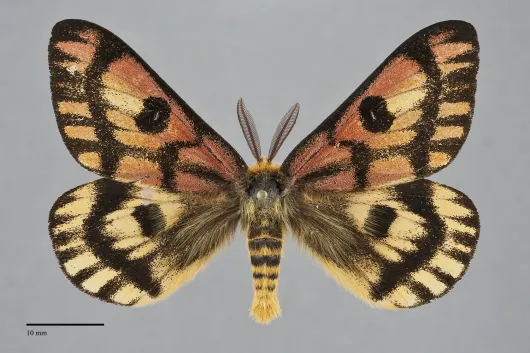
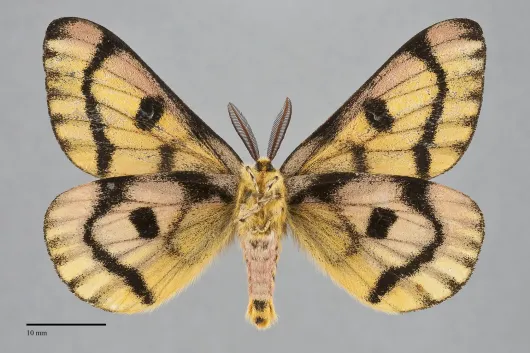
Hemileuca eglanterina is a notably large day-flying moth, measuring 32–36 mm in forewing length with a wingspan of 6.0–6.8 cm. The species displays orange to rose-pink or purplish forewings contrasting with lighter yellow or orange hindwings. Wing markings typically include thick black antemedial and postmedian lines, very large round or irregular discal spots, and veins, though black marking extent varies dramatically across populations.
The species is distinguishable by its substantial size and bold dark patterning on an orange ground. It may be confused only with yellow variants of Hemileuca nuttalli, which lack the characteristic orange or pink coloration. Two subspecies occur in the region: the nominate H. e. eglanterina and H. e. shastaensis from southwestern Oregon and adjacent California mountains. Larvae display brownish-black coloring with orange-colored dorsal hair whorls and black dorsal and subdorsal spines; populations west of the Cascades exhibit mostly black larvae, while eastern populations show white lateral markings.
Habitat
This species inhabits diverse open forest and shrubland environments, including montane forests at higher elevations, mixed hardwood forests at middle elevations, juniper woodlands, grasslands in the Willamette Valley, and prairies near the south Puget Sound and Strait of Georgia regions.
Distribution
Hemileuca eglanterina ranges throughout forested habitats south of southern British Columbia and southwestern Alberta, particularly common in the Cascade Mountains and western Oregon, becoming less frequent northward in Washington and British Columbia. It also inhabits northeastern Washington, northern and central Idaho, and areas near the Idaho-Wyoming border. Globally, the species occurs throughout the Rocky Mountain region and Pacific Coast states, extending from southern British Columbia and southwestern Alberta to southern Utah and northern New Mexico in the Rockies and to southern California coastally.
Life History
Eggs overwinter and hatch between April and May. Caterpillars are generalist feeders on hardwoods and shrubs, primarily Rosaceae and Ceanothus. Different populations utilize distinct host plants: Willamette Valley populations feed on roses and hawthorns; montane populations prefer serviceberry and cherries; juniper woodland populations consume bitterbrush. Young larvae feed gregariously while older individuals feed solitarily. Cocoons form loosely in leaf litter where they overwinter. Like other Hemileuca species, H. eglanterina is diurnal and adults do not feed. Adults resemble butterflies during flight, particularly silverspots, though their bobbing flight and frantic wingbeats distinguish them. The Pacific Northwest flight period extends from early June through early September. Females deposit eggs in rings on host plant stems.