Similar species
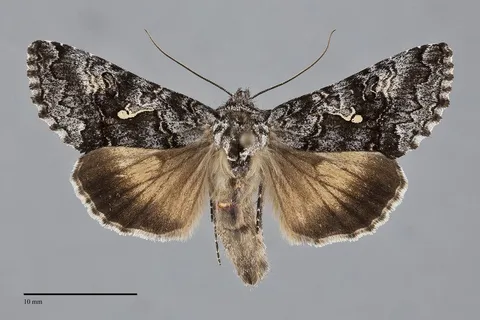
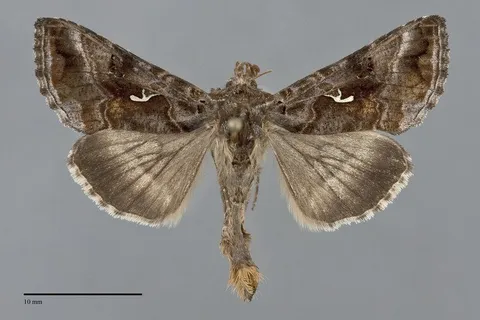
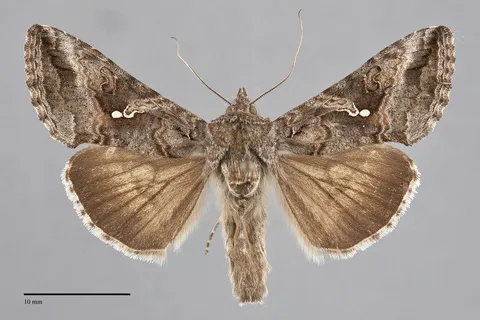
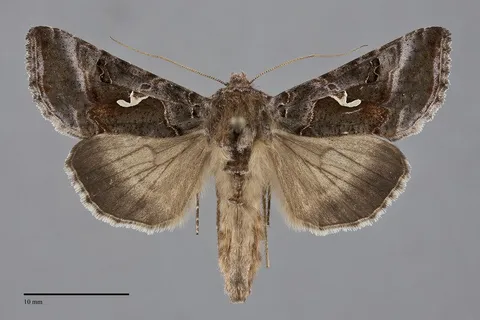
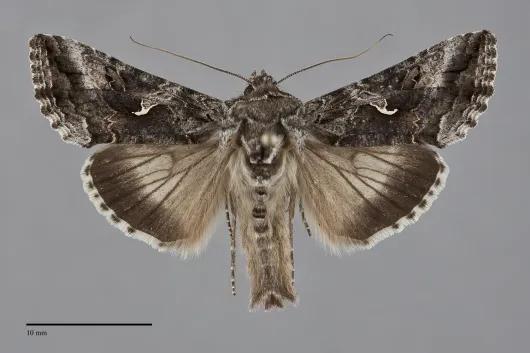
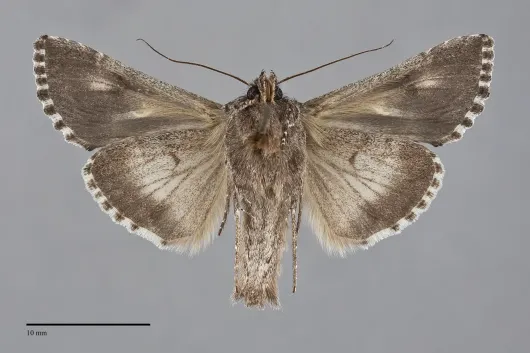
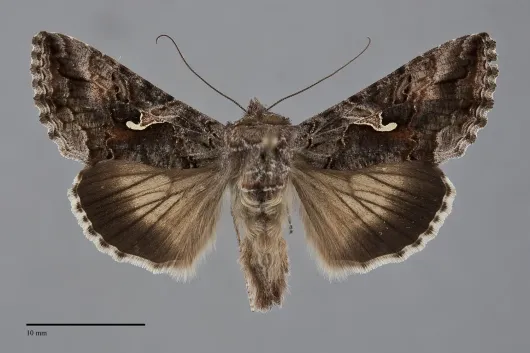
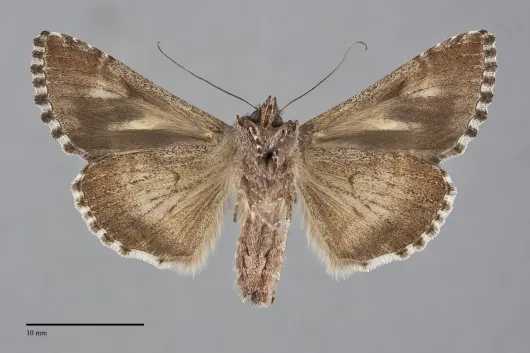
This medium-sized moth (forewing length 16–21 mm) displays strongly mottled, blue-gray coloration with characteristic silver-white stigma markings and chestnut brown patches. The species exhibits variable coloring ranging from blue-gray and black to lighter purple-gray tones. Key identifying features include a pointed forewing apex, the stigma's distinctive long basal "V" or "U" shape fused to an elongate sideways comma, and a short black basal dash. The orbicular and reniform spots are thin and pale, with the latter filled with ground color and black in the lower third. The hindwing appears gray-tan with a demarcated marginal band.
The larva is smooth with only two pairs of abdominal prolegs, green with a thin white lateral line.
This species can be distinguished from Autographa pseudogamma, which lacks a black line across the anterior subterminal area. It differs from Rachiplusia ou by being bluer gray, more mottled, and having a longer lateral part of the stigma. Syngrapha celsa differs by being entirely gray on the forewing with a distinctly yellowish stigma.
Habitat
This species is common to abundant throughout western North America. It frequently acts as an agricultural pest on herbaceous crops like alfalfa and peas in open field and urban settings. The moth also inhabits natural meadow environments at all elevations, from coastal grasslands to subalpine meadows in the Cascades and Rocky Mountains. It occurs on sagebrush steppe at lower elevations east of the Cascades but is more uncommon and sporadic in desert habitats except in irrigated crop areas.
Distribution
Autographa californica is found throughout the Pacific Northwest with no location or habitat restrictions. Globally, the range extends across western North America from southern British Columbia to southern Saskatchewan southward to the Mexican border, with documented occurrences in central and southern Alaska.
Life History
This generalist feeder consumes diverse herbaceous plants but appears to favor legumes (Fabaceae). Adults demonstrate partial diurnal activity, regularly visiting flowers for nectar in open meadows during daylight hours, and are most commonly collected nocturnally at lights. Collection records span February through November, with three peaks in May, July, and September. The species is a recognized pest of vegetable and forage crops, particularly destructive to legumes including peas, alfalfa, and clover.